
What Types of Ships are There? The Ship Classifications and Uses
[kadence_subtitle]
The market covers a wide range of vessel types and sizes. Some ships are built to standardised designs and can carry a variety of cargoes. Others are specialised, built solely to carry specific goods. Vessel designs are evolving quickly—so here is a brief overview of the main ship types in the freight market.
Dry cargo vessels
Dry cargo ships are the most widely used type of cargo ship. Also known as general cargo ships, they mainly transport various types of dry cargo, and drummed liquid cargo also falls within their scope. They are called “dry cargo ships” because they mainly carry dry cargo in bales, bundles or containers. General cargo ships, bulk carriers, coastal vessels, container ships and special-purpose vessels all fall within this category. Each of these can be further divided into multiple sub-categories based on technical characteristics and hull dimensions.
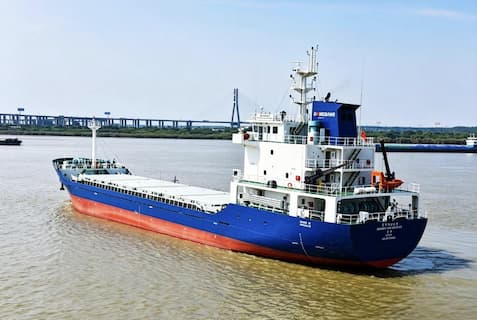
General Cargo Ship
Ships of this type entered mass production as early as the Second World War. The 10,000-tonne Liberty-type ship was particularly widespread at the time. They were originally designed to carry various general cargoes, including bagged goods, packaged goods and bulk cargo. General cargo ships generally have relatively small hulls, with deadweight tonnage typically ranging from 5,000 to 25,000 tonnes.
Double-Deck Vessel
Double-deck vessels can store different types of cargo in separate compartments. The area between the main deck and the upper deck is known as the between-deck hold, also called the upper hold. The space beneath the upper deck is the main hold, also known as the lower hold. Compared with single-deck vessels, double-deck vessels offer two main advantages. First, they have mutually independent cargo holds, so goods that need separate storage to prevent cross-contamination can be carried. Second, the two decks can share the load, allowing bagged cargo to be stowed in higher stacks, while the upper deck can be retracted or folded away to make loading and unloading easier. Modern general cargo ships are also fitted with container handling equipment to transport containers. They carry ship’s cranes with a lifting capacity of approximately 30–40 tonnes, used to handle containers and other types of general cargo.
Bulk Carrier
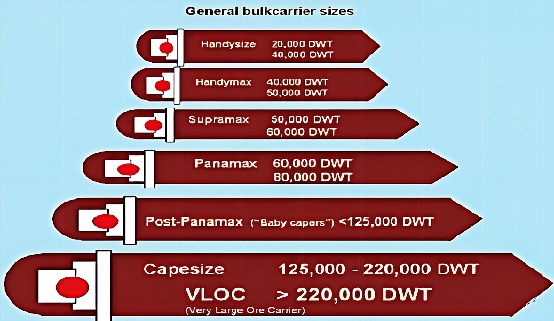
In the shipping industry, there is a specific type of vessel designed to carry bulk cargo: the bulk carrier. The name clearly indicates its primary purpose. The 2009 edition of the SOLAS Convention provides a clear definition: any vessel carrying dry bulk cargoes such as grain, coal, ore, salt and cement in bulk is classified as a dry bulk carrier. The cargoes these vessels carry do not require packaging or lashing, are not susceptible to crushing, and have straightforward loading and unloading procedures. The cargo types are also relatively uniform. This is why the vast majority of bulk carriers adopt a single-deck design, with many vessels having a deadweight tonnage exceeding 50,000 tonnes.
Stowage factors for different types of dry bulk cargo vary significantly, leading the industry to make a distinction. Vessels transporting goods with similar stowage factors, such as grain and coal, are referred to as bulk carriers. Those specialising in goods with relatively low stowage factors, such as ore, are classified separately as ore carriers.
Mini Bulkers
Vessels of this type have a maximum deadweight tonnage of approximately 15,000 tonnes and primarily operate on coastal routes. Compared with standard deep-sea dry bulk carriers, their role is markedly different. Vessels in this tonnage class are more versatile. In addition to transporting bulk cargo, they can be adapted to various specialised transport tasks in coastal waters, meeting diverse coastal freight requirements.
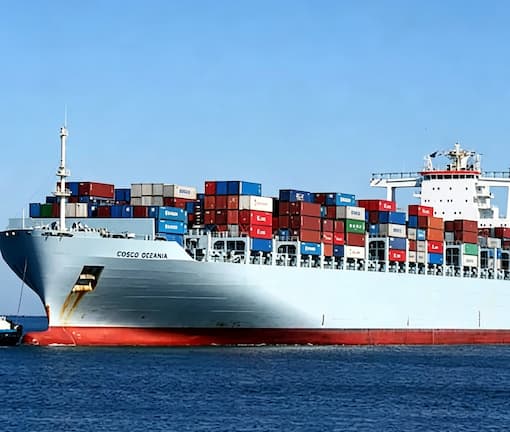
Container Ship
The sole function of these vessels is the dedicated carriage of containers. Their holds feature a unitised layout, with numerous frames and rails installed internally to secure the containers. Carrying capacity varies widely: from as small as 500 TEU to large vessels with a capacity of up to 22,000 TEU. Feeder services are the primary role of small container ships, which supply and replenish major hub ports. Many are equipped with their own shipboard cranes. In contrast, large container ships operating on long-haul transoceanic routes are generally not fitted with shipboard cranes and can reach speeds of up to 25 knots. Their operational models differ markedly from those of general cargo and bulk carriers. Major shipping companies often charter container ships on a time-charter basis, offering end customers transport solutions with fixed prices and scheduled sailings.
Special-Purpose Vessels
Special-purpose vessels comprise a diverse range of sub-categories. Different vessel types cater to entirely distinct cargo requirements. This article focuses on several representative categories: heavy-lift vessels, timber carriers, livestock carriers, refrigerated vessels and roll-on/roll-off (Ro/Ro) vessels. Each of these features a bespoke hull structure designed to meet the specific transport requirements of its respective cargoes.
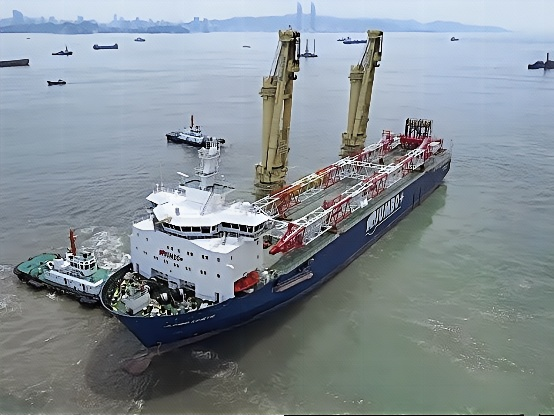
Heavy-lift vessels may look similar to multi-purpose vessels, but their core strength is lifting heavy loads. They are specifically designed to handle all manner of large-scale engineering cargo. The maximum lifting capacity of a single crane on such a vessel is 2,000 tonnes. When multiple cranes operate in coordination, this capacity can reach 3,000 tonnes—far beyond the operational limits of conventional vessels equipped with their own cranes.
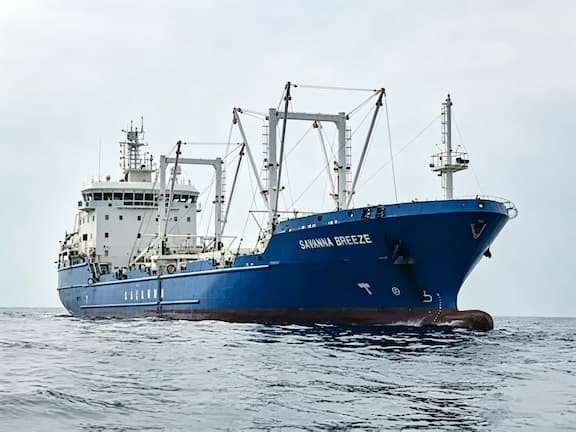
As a highly specialised type of vessel, reefer ships feature a number of unique design elements. Most are fitted with two or more decks, with cargo holds that are physically separated and independently temperature-controlled. This enables them to meet the diverse refrigeration requirements of various cargoes at the same time. To minimise voyage duration, these vessels are designed for high speed. Their on-board cranes offer exceptional loading and unloading efficiency, reducing the time cargo is exposed outside the holds and minimising cargo damage caused by temperature fluctuations.
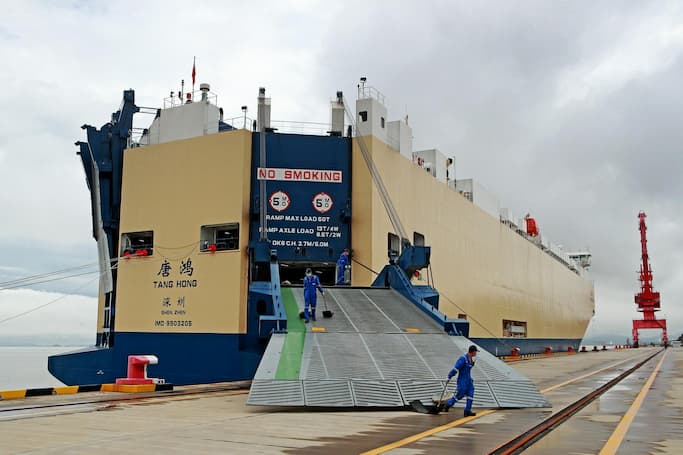
Ro-Ro vessels carry wheeled vehicles such as cars, lorries and goods trailers. Many Ro-Ro vessels also serve as ferries, transporting both passengers and vehicles. The two key parameters for assessing the performance of such vessels are the usable area of the vehicle deck and the specifications of the ramps used for vehicles to board and disembark.
Tankers
Commonly referred to as liquid cargo carriers, this is a broad umbrella term that encompasses a wide range of vessel types. These include crude oil tankers, refined oil tankers, chemical tankers, as well as LNG (liquefied natural gas) carriers and LPG (liquefied petroleum gas) carriers, among others.
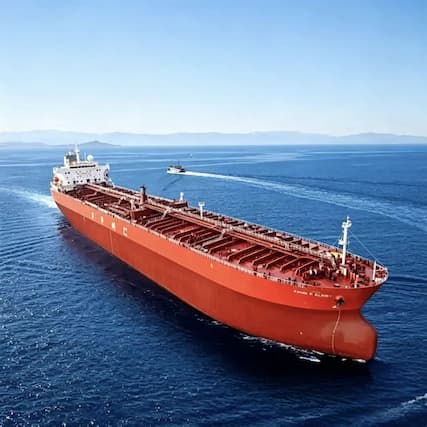
Refined Oil Tanker
Various petroleum products are the result of refining crude oil. Light petroleum products such as petrol, kerosene and light diesel oil are of high purity, while heavy petroleum products such as marine fuel oil and petroleum residue contain higher levels of impurities. Product tankers are classified according to the purity grade of the oil they carry, resulting in a distinction between clean product tankers and dirty product tankers.
Crude Oil Tanker
There are only limited differences in the design of crude oil tankers, so the mixed carriage of different types of crude oil is acceptable. After all, once the cargo reaches the buyer, it is all refined together. Crude oil tankers transport crude oil from its source to refineries. Their tonnage ranges widely, from a minimum of 50,000 tonnes to top-tier ULCCs (Ultra-Large Crude Carriers), which can carry over 500,000 tonnes. Most carry only one or two types of crude oil, and the complexity of their on-board pumping and piping systems is far lower than that of refined product tankers.
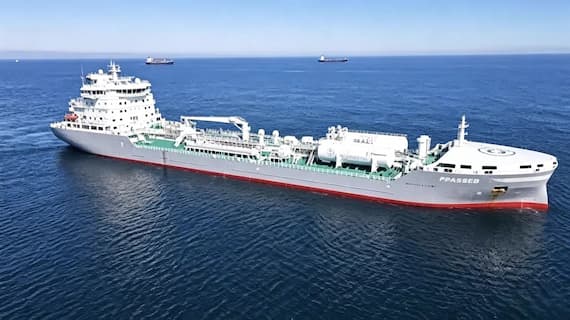
Chemical Tanker
Most chemical tankers are compact in size, with deadweight tonnages generally ranging from 5,000 to 25,000 tonnes. A few types can reach 50,000 tonnes. They are divided into two main categories: those carrying high-risk oil products and those carrying edible oils. Given the specialised nature of hazardous chemical transport, vessels must meet stringent standards.
(1) Tanks are fitted with advanced protective coatings—commonly stainless steel, epoxy resin or zinc silicate—which are easy to clean and prevent chemical reactions between the cargo and the tank walls.
(2) Each tank is independently equipped with a deep-well pump. This allows for the isolation of different cargoes during loading and unloading, enabling the carriage of multiple types of chemicals on the same vessel while preventing cross-contamination.
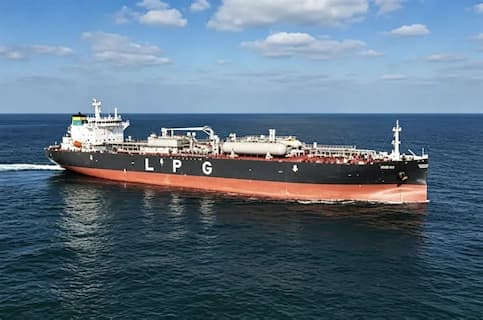
LPG Carrier
Liquefied gas carriers are highly specialised liquid cargo vessels, primarily divided into two types: LNG (liquefied natural gas) carriers and LPG (liquefied petroleum gas) carriers. Liquefied natural gas consists mainly of methane and requires a temperature of –162 °C to remain in a liquid state. LPG carriers primarily transport propane and butane, and may also carry ammonia. The ship’s pressurised cargo tanks are maintained at 10–12 atmospheres and a temperature of –50 °C to keep the gas in a liquid state. The carrying capacity of liquefied gas carriers is calculated in cubic metres of cargo capacity: small LPG carriers have a capacity of approximately 500 cubic metres, large LPG carriers can reach 85,000 cubic metres, while LNG carriers have a maximum cargo capacity of 265,000 cubic metres.
Bitumen Barge
There are small tankers on the market designed specifically for transporting bitumen. The standard cargo capacity of most conventional vessels does not exceed 7,500 tonnes, while some newly built bitumen tankers have increased their capacity to 20,000 tonnes. As bitumen requires continuous heat retention, the defining capability of these vessels is their ability to maintain a stable cargo hold temperature of 200°C. As they lack an inert gas system, they are not suitable for carrying oil cargoes other than “dirty oil”, which does not require cleaning.