
New Developments in the Shipbreaking Market: Over Half of the Oil Tankers Awaiting Dismantling Are Sanction Ships
[kadence_subtitle]
Ⅰ. Global Shipbreaking Volume Hits Historic Lows
According to Clarksons’ statistics, the total deadweight tonnage of ships sent for scrapping globally this year amounted to only approximately 6.4 million metric tonnes, representing a further 14 per cent decrease compared with the same period last year and broadly in line with the series of historic lows recorded between 2022 and 2025. Breaking this down by ship type, the volume of bulk carriers sent for scrapping fell by 34 percent year-on-year, whilst the total volume of container ships scrapped for the year amounted to just 25,000 TEU.
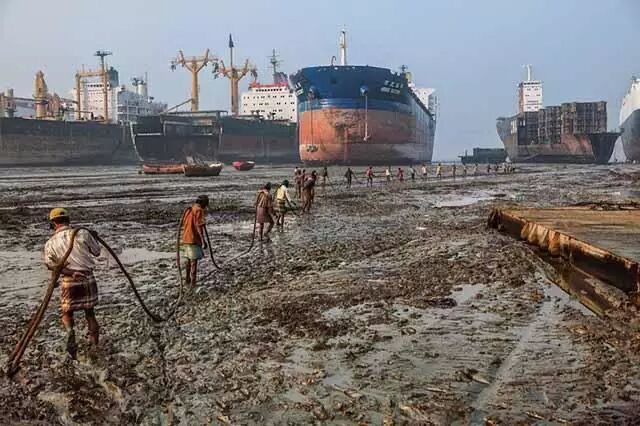
The view of the relevant local authorities in Alang, India, is quite straightforward: the volume of ships available for scrapping on the international market has hit rock bottom. The shipbreaking industry operates on a simple logic: in years when the shipping market is booming and freight rates are high, shipowners do not sell off their ships, and the shipbreaking yards lie deserted; once freight rates fall sharply, however, ageing ships flock to shore for scrapping, and the shipbreaking yards become a hive of activity. The year 2026 is precisely a period of favourable freight rates, yet the market is unusually quiet compared to previous years.
Geopolitical tensions have driven up freight rates on major shipping routes. An ageing bulk carrier that has been in service for over twenty years is still generating a steady return, so shipowners are naturally reluctant to send their ships to be scrapped. This has directly led to a situation where shipbreaking yards are well-funded and domestic steel prices are continuing to rise, yet they face the predicament of having no ships to break up. Industry weekly reports from early October indicate that only a small number of second-hand ships remain on the market, with cash buyers vying to place bids and driving prices ever higher.
Ⅱ. Sanction Ships Now Dominate Tanker Scrapping
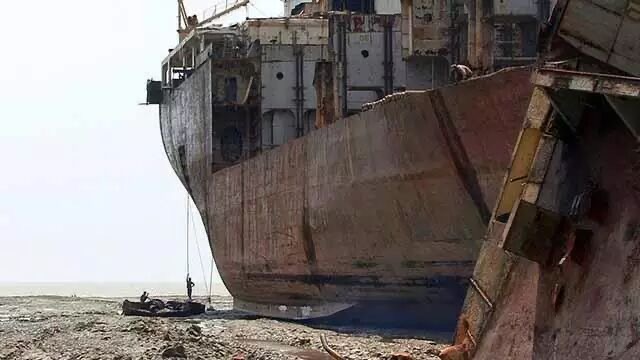
In the current market environment, where owners are generally reluctant to decommission ageing ships, which ships will actually end up being scrapped? Clarksons’ statistics reveal some surprising figures: amongst the tanker scrapping transactions reported so far this year, sanction ships account for 58 per cent.
The relevant statistics cover a total of 26 ships with a combined deadweight tonnage of 2.1 million tonnes, comprising 22 oil tankers with a deadweight tonnage of 1.8 million tonnes. These ships are being sent to shipbreaking yards not because of their age, but because, following Western sanctions, no ports are willing to accept them, insurers will no longer cover them, and charterers are reluctant to charter them. The fate of the ageing “shadow fleet” is undergoing a shift: whereas shipowners previously maintained operations by changing flags, a large number of ships are now being withdrawn directly from the shipping market and sent for scrapping.
The case led by the United States is the most representative. The two sanctioned oil tankers seized by the US in January this year were granted a scrapping licence by the Treasury Department in August and were taken over by the Dubai-based intermediary GMS for scrapping. GMS had previously been authorised to handle four sanctioned Iranian container ships. As one of the world’s leading ship-breaking intermediaries, GMS estimates that, should this licensing mechanism be successfully implemented, it could remove over 100 ships from the shadow fleet each year.
Ⅲ. The economics of shipbreaking
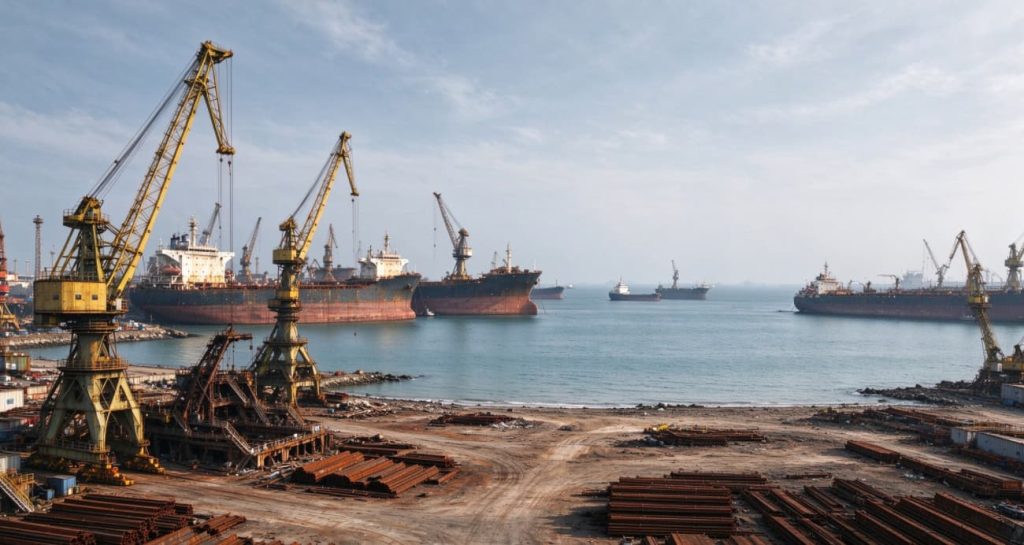
The entire fleet continues to age, with the average age of bulk carriers rising from 8.6 years in 2018 to around 13 years today. However, the annual scrapping volume stands at only 2–3 million deadweight tonnes, less than a third of the level seen during the trough of 2015–2016. Scrapping prices are calculated on a light tonnage (LDT) basis: Gadani in Pakistan offers the highest rates, at approximately US$525–530; Alang in India at US$405–450; Chittagong in Bangladesh at US$410–440; whilst Aliaga in Turkey offers the lowest rates, at just US$260–280.
It is worth noting that scrap steel prices in the four major shipbreaking markets have remained largely stable, ranging from US$375 to US$390 per metric tonne. Price differences across regions stem not from the steel itself, but from compliance and labour costs. An international convention is reshaping the industry landscape. The Hong Kong Convention officially came into force on 26 June last year; having been in place for just over a year, its impact is already evident: of the 128 shipbreaking yards in Arang, India, 115 have already obtained HKC certification, and India has also approved a production expansion plan worth 12.24 billion rupees; Bangladesh’s shipbreaking volume has fallen from 89 ships in the first half of the year before last to 57, with local facilities still adapting to the new regulations; Pakistan only commissioned its first certified shipbreaking facilities at the beginning of this year.
Whether a shipowner sends a ship for scrapping depends largely on the results of the special inspection. The cost of a special inspection for a medium-sized ship can run into millions of dollars; shipowners will only invest in such an inspection if the subsequent returns can cover the costs. As long as freight rates remain sufficiently attractive, older ships will not enter the scrap market.
Ⅳ. Future Outlook: The Cycle Is Broken, and the Bill Is Deferred
Ship scrapping is, by its very nature, a buffer mechanism within the shipping cycle: when freight rates fall, ageing ships are sent for scrapping, causing a corresponding contraction in shipping capacity, after which the market bottoms out and begins to recover. However, in the current cycle, sanctions have replaced this regulatory mechanism — ships that would otherwise have remained in service and were not due for retirement are now being sent for scrapping one after another as a result of sanctions.

A total scrapping volume of 6.4 million metric tonnes, a proportion of 58 per cent comprising sanction ships, coupled with 115 compliant scrapping sites in the Alang region, collectively paint a picture of the industry: when the next trough in freight rates arrives, the number of ships flooding into the scrapyards will exceed everyone’s expectations and will come even more rapidly. Ships will inevitably age. However, on this occasion, market conditions alone will no longer determine when a ship enters the scrapping process.

For charterers, the short-term implications are quite clear: as the fleet continues to age, the proportion of older ships in operation within the market is set to rise. Over the coming years, vetting criteria such as ship age and special inspection records will become even more critical. For shipowners with ageing ships, there is one practical piece of advice: ensure that IHM certificates are obtained well in advance; do not wait until the ship is ready for sale to apply for them at the last minute.
Looking at the shipping market as a whole, this is effectively a bill whose payment has been deferred. With ageing ships remaining in service whilst newbuilds are delivered as scheduled, the peak in newbuild deliveries in 2027 will coincide with a fleet whose average age exceeds the conventional cycle. Should freight rates fall, the long-suppressed demand for scrapping will erupt all at once, thereby driving up scrap prices; by then, the capacity limits of HKC-certified scrapyards will become a new bottleneck for the industry.