
Wärtsilä, Sulzer, and WinGD: What’s the Real Relationship?
[kadence_subtitle]
What is the relationship between Wärtsilä, Sulzer and WinGD?
Let’s quickly go through this century‑long tech story, where ownership changed but core technology stayed the same.
Sulzer from Switzerland was the industry pioneer. In 1893, it got diesel engine technology licensed from Rudolf Diesel. Its RTA series dominated the global market in the 1980s, ranking among the world’s top three low‑speed engine brands together with MAN and Mitsubishi.
In the 1990s, Wärtsilä purchased Sulzer’s whole low‑speed engine business and all its technology. The Sulzer engine brand was phased out by 2005.
A major shift happened in 2015. CSSC bought Wärtsilä’s low‑speed engine segment and founded WinGD. Its headquarters is still in Winterthur, Switzerland — Sulzer’s original home, so the technical heritage remains intact. Wärtsilä sold all shares in 2016, making WinGD a fully‑owned CSSC subsidiary.
Today WinGD takes over 30% of the global low‑speed engine market. It holds over 80% of global orders for LPG dual‑fuel engines. China’s first commercial ammonia‑fuel low‑speed engine was delivered this March.
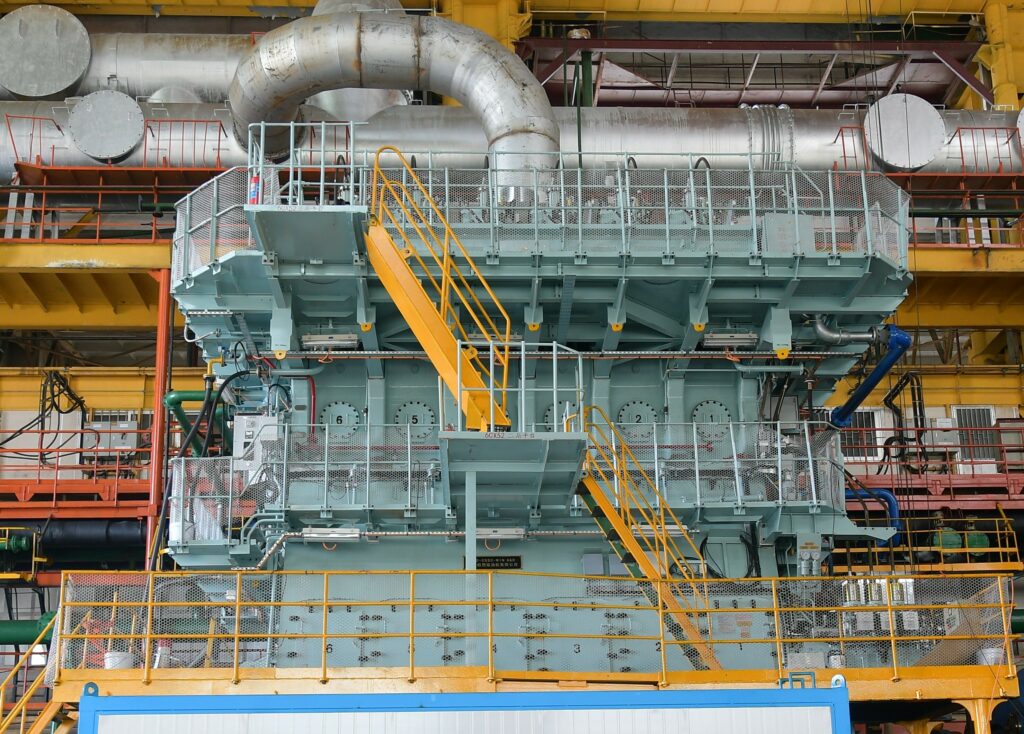
In short: Sulzer was the original developer, Wärtsilä once ran the business, and WinGD carries on the technology.
Since 2018, they have signed a 10‑year service deal. Wärtsilä’s global network still provides maintenance and spare parts for these engines.
So if you spot Sulzer‑branded engines on ships, they share the same Swiss technical origin.
After a hundred years and three ownership transitions, this fine engineering technology is now fully owned by CSSC from China.