AI Empowers Maritime Operations: Practical Applications of Gemini, ChatGPT & OpenAI in Shipping Industry
[kadence_subtitle]
AI is permeating every corner of the global society at an unprecedented pace, evolving from a supporting tool to a core productivity driver—especially in the maritime and shipping industry, which is undergoing profound digital transformation. From route optimization and equipment maintenance to safety management and spare parts supply, AI technologies such as Gemini, ChatGPT, and OpenAI’s underlying models are no longer abstract concepts but practical tools that penetrate daily shipping operations, reshaping industry workflows, reducing costs, and enhancing efficiency.

As an active participant in the global marine equipment trade, we closely track the application of cutting-edge AI technologies and integrate them into our service system. Focusing on engine-related products, marine pumps, and key spare parts (including cylinder heads, crankshafts, turbochargers, valves, and sensors), we leverage AI to optimize product matching, improve service responsiveness, and provide customers with more agile, efficient, and reliable solutions—truly making AI a new engine for shipping productivity.
I. AI-Powered Route Optimization: Gemini & OpenAI Drive Fuel Efficiency and Equipment Performance
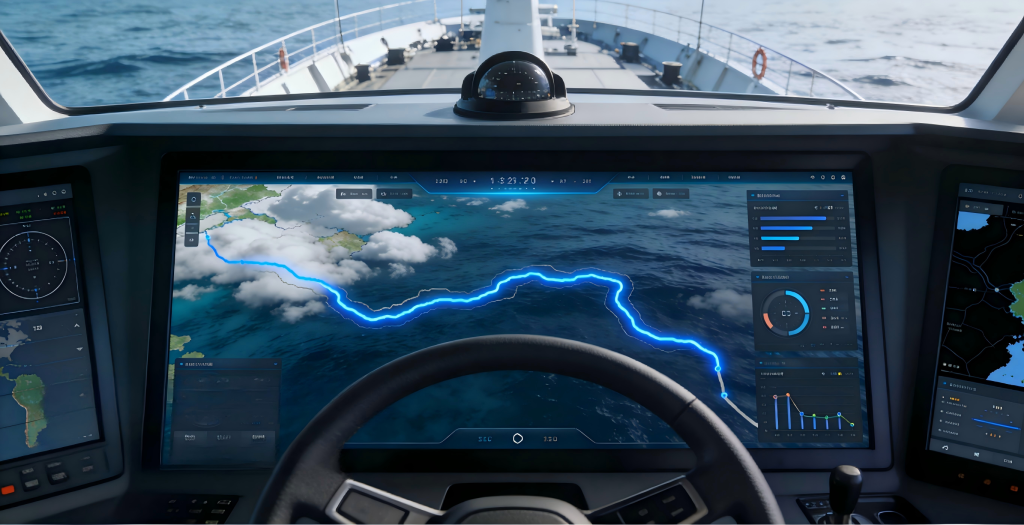
AI-based navigation optimization systems, empowered by large language models (LLMs) like Gemini and OpenAI’s algorithms, have become a game-changer for ship navigation. These systems dynamically integrate and analyze multi-source real-time data—including weather forecasts, sea condition updates, ship load parameters, and engine operating data—to generate the most cost-effective and safe routes. Unlike traditional static planning tools, Gemini’s deep learning capabilities enable the system to continuously learn from historical navigation data, adapt to the ship’s actual operating characteristics, and adjust routes in real time to avoid adverse sea conditions or optimize fuel consumption.
In practical application, the system can predict potential engine load fluctuations based on route changes and proactively recommend parameter adjustments, reducing unnecessary wear on propulsion systems. For example, a bulk carrier using this AI system reduced fuel consumption by 8-12% on a trans-Pacific voyage, while minimizing the risk of overheating in turbochargers and valves—achieving dual goals of cost savings and environmental compliance.
II. Digital Twin + AI: Real-Time Equipment Monitoring with ChatGPT-Enhanced Early Warning
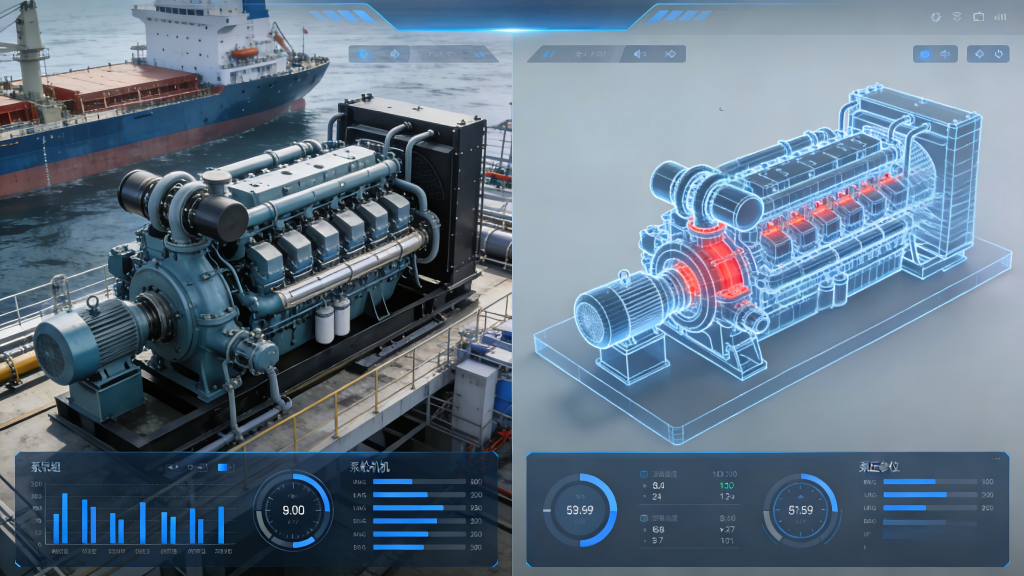
Digital twin technology, combined with AI’s data analysis capabilities, has revolutionized ship equipment monitoring. By constructing a virtual digital replica of the ship, the system integrates hull structure data, engine operating parameters, pump operation status, and real-time sensor feedback to realize full-process visual management of equipment. What makes this system more practical is the integration of ChatGPT’s natural language processing (NLP) capabilities: when AI algorithms detect anomalies (such as abnormal engine vibration, pump pressure fluctuations, or valve leaks), ChatGPT can translate complex data alerts into intuitive, actionable text notifications for crew members.
For instance, if a marine pump’s pressure sensor detects an abnormal drop, the system not only triggers an early warning on the control panel but also sends a message via the ship’s communication system: “Pump No. 3 pressure dropped by 15% in 10 minutes—possible causes include valve blockage or impeller wear. Recommended actions: Check valve status immediately; prepare spare seals and impellers if necessary.” This integration of digital twin and ChatGPT significantly reduces the crew’s response time to equipment failures and provides clear guidance for spare parts scheduling and preventive maintenance, cutting unplanned downtime by over 30% for many shipping companies.
III. Predictive Maintenance: OpenAI Algorithms Extend Equipment Lifespan
Traditional scheduled maintenance often leads to waste of spare parts or unexpected failures due to mismatched maintenance cycles with actual equipment wear. AI-based predictive maintenance systems, powered by OpenAI’s advanced machine learning algorithms, solve this problem by continuously analyzing sensor data such as engine temperature, lubricating oil quality, pump efficiency, and crankshaft rotation speed. These algorithms can accurately model the health status of core equipment, predict potential failures, and recommend optimal maintenance timelines and spare parts replacement plans.
In our cooperation with a European shipping fleet, the predictive maintenance system successfully predicted a potential failure of a marine engine’s cylinder head based on 3 months of operational data—alerting the shipowner to replace the part during a scheduled port call. This proactive measure avoided a costly mid-ocean breakdown and extended the engine’s service life by 18 months. For marine pumps, the system can analyze flow rate and pressure data to predict seal wear, enabling timely replacement before leaks occur—reducing maintenance costs by 25% and improving fleet operational reliability.
IV. AI-Ready Damage Control: Intelligent Emergency Response for Enhanced Safety
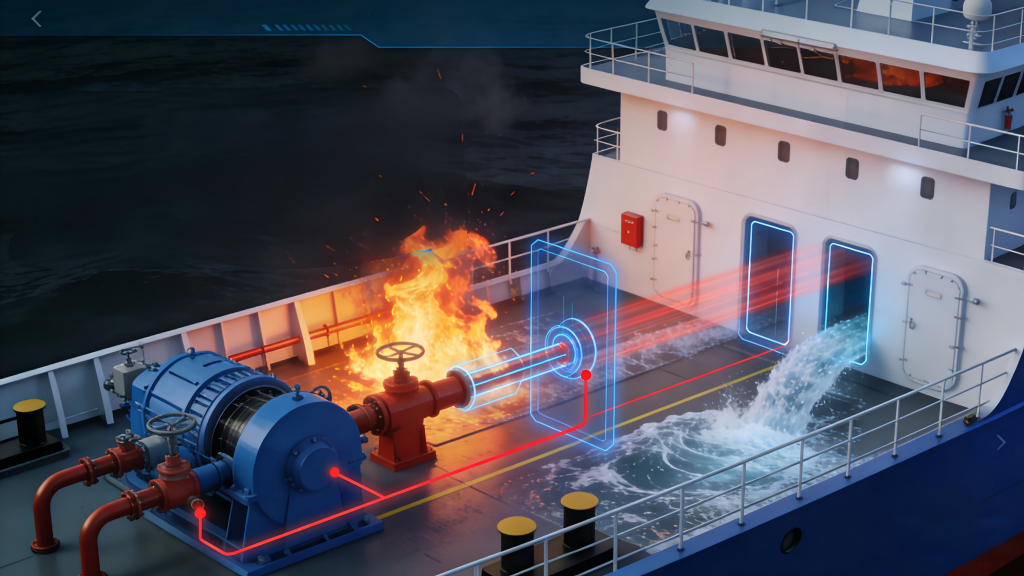
The maritime industry faces inherent risks such as fires and flooding, and AI is now elevating emergency safety capabilities to new heights. The “AI-Ready Damage Control Support System” (AI-Ready DCSS) developed by the Korea Institute of Shipbuilding and Ocean Engineering (KIANOMACH) is a typical example. This domestically produced system integrates Gemini’s scenario simulation capabilities and OpenAI’s decision-making algorithms to detect hazards in real time during accidents, intelligently simulate the best response procedures, and automatically link with pump sets, valves, and compartment systems to execute emergency operations.
In a fire simulation test, the system identified the fire source within 2 seconds, closed the relevant compartment valves, activated fire-fighting pumps, and guided crew members to the safest evacuation route—all through a combination of visual alerts and ChatGPT-generated voice instructions. This system breaks the monopoly of foreign technology, providing cost-effective safety solutions for small and medium-sized vessels, while driving growing demand for intelligent sensors, control systems, and specialized spare parts (such as fire-fighting pump components and emergency valves) in the market.
V. Data-Driven Decision-Making: AI Agents Reshape Ship Equipment Management
Behind every AI application in shipping lies high-quality, multi-source structured data—and AI agents are becoming the core hub for data analysis and decision-making. These agents, built on models like Gemini and ChatGPT, integrate data from ship navigation, equipment operation, and maintenance records (including engine load, fuel flow, tank temperature, and emissions) to generate actionable insights for ship owners and managers.
For example, an AI agent can analyze a fleet’s 6-month operational data to identify that a certain type of marine pump has a higher failure rate in high-temperature sea areas, then recommend adjusting the maintenance cycle or replacing it with a heat-resistant model. In spare parts supply, ChatGPT’s NLP capabilities enable the agent to process unstructured data such as customer inquiry emails or maintenance reports, quickly matching the required cylinder heads, turbochargers, or sensors—reducing order processing time by 40% and improving customer satisfaction.
The Future of AI in Maritime: From Perception to Decision-Making Intelligence
In the shipping industry, AI is no longer a “nice-to-have” but a “must-have” tool. The deep integration of AI agents with route planning, equipment maintenance, and safety management is driving the industry toward greater intelligence. Looking ahead, trends such as multimodal data fusion (combining text, images, and sensor data), embodied intelligence (AI interacting with physical equipment), and deeper integration with specialized maritime fields will further enhance AI’s capabilities—from basic data perception to advanced decision-making support.
As a leader in marine equipment solutions, we will continue to leverage Gemini, ChatGPT, OpenAI, and other cutting-edge AI technologies to optimize our product portfolio and service processes. Whether it’s accurate matching of marine spare parts, intelligent prediction of equipment failures, or efficient response to customer needs, we are committed to empowering every link of the shipping industry with AI—helping our customers navigate the digital transformation journey and achieve sustainable development in a competitive global market.
How about you ? Do you apply AI tools as question answer tool or use it to optimize and automate your workflow ?