
Basic knowledge of marine engine, gearbox and propeller matching
[kadence_subtitle]
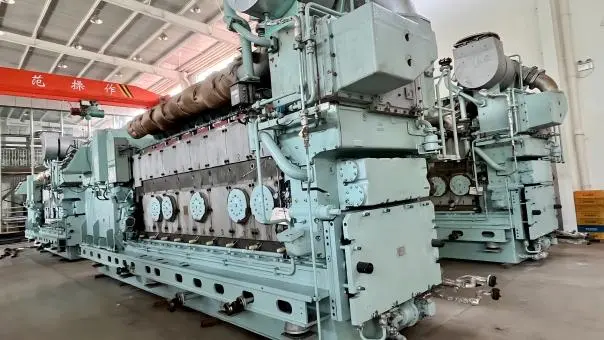
In marine propulsion systems, the proper matching of the engine, gearbox (reduction gear) and propeller is crucial. It directly affects the marine power performance, fuel economy, speed and service life.
Ⅰ.Basic Requirements for Marine Engines
1) Classification of Marine Engines
By Fuel Type:
- Diesel engines, gas engines, dual-fuel engines
By Speed:
- Low-speed engines (<300 rpm): Such as large two-stroke diesel engines, applicable to ocean-going cargo ships
- Medium-speed engines (300-4000 rpm): applicable to medium-sized cargo ships, fishing boats, etc.
- High-speed engines (>4000 rpm): applicable to speedboats, warships, yachts
2) Marine Engine Parameters
- Rated Power (kW/HP): Determines the propulsion force
- Rated Speed (rpm): Requires matching with gearbox and propeller
- Torque (Nm): Affects ship acceleration on speed and heavy-load capacity
- Fuel Consumption (g/kWh): Determines economic efficiency
Ⅱ.Function and Matching of Gearboxes (Reducers)
1) Function of the Gearbox
- Reduction and Torque Boost: Reduces engine speed and increases torque output
- Reversing Function: Supports forward/reverse switching
- Adaptation to Different Working Conditions: Such as azimuth propulsion, variable pitch propellers etc.
2) Selection of Reduction Ratio
- Reduction Ratio = Engine Speed ÷ Propeller Speed
- It needs to be calculated based on the propeller diameter, ship speed, and load conditions.

Ⅲ.Propeller Matching Principles
1) Basic Propeller Parameters
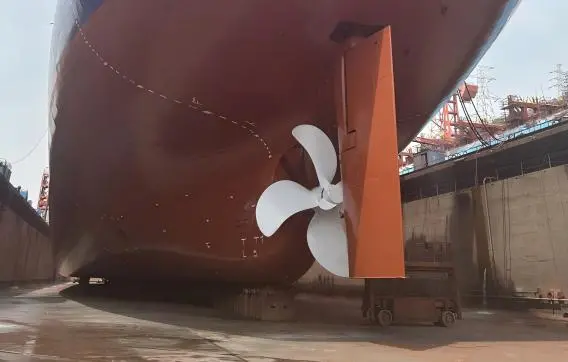
- Diameter (D): Determines thrust
- Pitch (P): Affects speed and efficiency
- Number of Blades (Z): Affects vibration and efficiency
- Installation Angle (Adjustable/Fixed)
2) Propeller Calculation
- Theoretical speed (V) = Rotational speed × Pitch × Efficiency
- Cavitation effect, propulsion efficiency, hull resistance, etc. Need to be considered.
Ⅳ.Matching Optimization Strategy
1) Low-speed vessels (e.g. cargo ships, fishing boats)
- Choose low-speed or medium-speed diesel engines to improve fuel efficiency.
- Choose larger diameter, smaller pitch propellers to increase driving forcing.
- Appropriately increase the reduction ratio to optimize torque output.
2) High-speed vessels (e.g., yachts, warships):
- Choose high-speed diesel engines to meet high-speed requirements.
- Choose smaller diameter, larger pitch propellers to improve propulsion efficiency.
- Choose low reduction ratios or direct drive to reduce power loss.
Ⅴ.Conclusion
The proper matching of the engine, gearbox, and propeller is crucial for ensuring efficient ship operation. It is necessary to comprehensively consider power requirements, fuel economy, speed requirements, and hull design. In actual matching, optimization can be achieved by using computational models, ship test data, and CFD simulation analysis.