
New Demands for Centrifugal Pump Technology
[kadence_subtitle]
The centrifugal pump industry is at a turning point. It is moving away from being experience-driven and toward a data-driven future. Three major forces are pushing this shift: the push for maximum energy efficiency, the need for standardisation and better project cycle management, and the demand for wider operating flexibility without sacrificing reliability. This is not just another round of technical upgrades. It is a fundamental change in how the industry thinks and operates.
The Centrifugal Pump Industry: Why It Is Essential to Accelerate Transformation and Upgrading
Over the past two decades, China’s energy and chemical sectors have grown rapidly. Centrifugal pumps are used everywhere across these facilities. In the early days, the focus was simple: make sure the pump works. Energy consumption was not a top priority. That mindset has stuck around, and as a result, many inefficient pump units are still running today. The industry as a whole has huge untapped potential for energy savings and reduced consumption.
With the rise of new-quality productive forces, along with smart manufacturing and green, low-carbon initiatives, the market is asking more from centrifugal pumps. These new demands are likely to define where the technology goes next. Pumping systems are major energy users in industry. They account for about 20% of all industrial electricity consumption each year. And if you look at the total lifetime cost of a single pump, energy makes up roughly 30% of that. This tells us something important: centrifugal pumps are not just fluid movers. They are energy-consuming assets that keep running and generating carbon emissions over their entire lifespan.
The mandatory national standard GB 19762-2025 is set to reshape the competitive landscape in a major way. Many in the industry see it as a game-changing regulation. GB stands for mandatory, not voluntary. Unlike industry guidelines or corporate self-regulation, this standard carries legal weight. It is a hard threshold that products must meet before they can be sold in the market. The approach to centrifugal pump energy efficiency has shifted fundamentally. In the past, the focus was on encouraging the selection of high-efficiency pumps. Now, the rule is simple: low-efficiency pumps must be phased out.
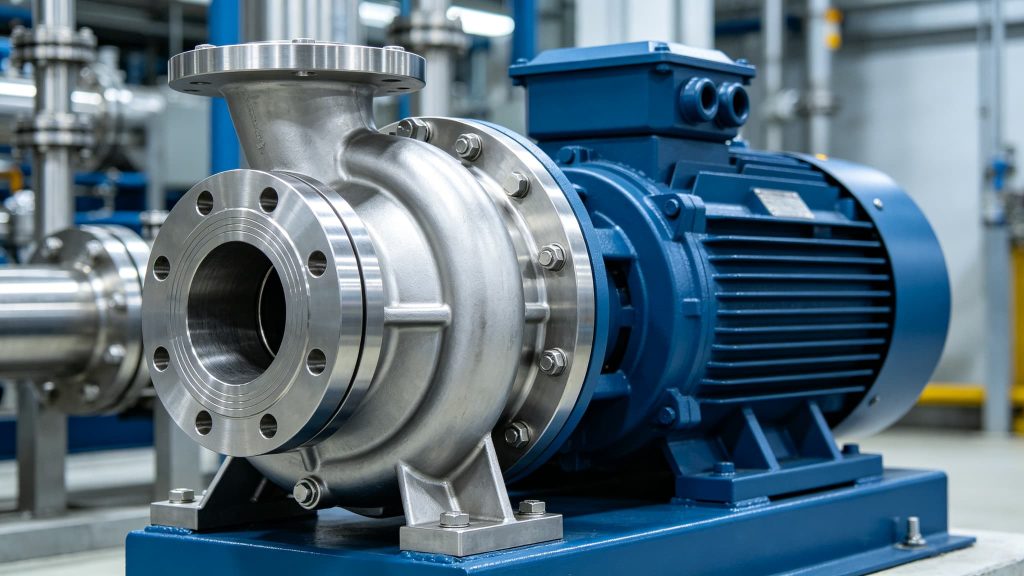
The new standard takes effect on 1 March 2026, but its impact is already being felt. Two years ago, major state-owned enterprises—including the three big oil companies—started making energy efficiency a key factor in their centrifugal pump tenders. Once equipment receives Grade 1 or Grade 2 energy efficiency certification, companies can apply for government subsidies for new facilities. With mandatory standards as the foundation and subsidies as the incentive, market resources are steadily flowing toward high-efficiency pumps. This is the main engine driving the industry’s transformation.
If energy efficiency is the push factor, then shorter project construction cycles are the pull factor. The profit model for modern chemical projects has changed completely. In the new materials and new energy sectors, markets move fast. The earlier a project comes online, the better its chance to capture market share. That puts pressure on the equipment supply chain to move faster too. The key to shorter construction timelines is comprehensive standardisation—unifying how equipment is designed and selected, and using standardised systems to cut down build time. Standardisation is not a new idea. But covering every component and every equipment interface requires coordination across the entire industry.
Alongside energy efficiency and project timelines, process innovation is the third major driver of change. As profit margins in traditional chemical manufacturing continue to shrink, more companies are moving into the new materials space. With intelligent design tools and new technologies advancing quickly, new process packages and project construction timelines are accelerating too. But this speed brings its own problems. In many projects, centrifugal pumps work fine at the start. But after six months to a year, operating conditions shift significantly, and the original equipment no longer fits. The root cause is that new processes are being developed fast, without enough real-world operating experience to back them up. This creates a growing gap between the pump’s design conditions and its actual operating conditions. Looking ahead, chemical process conditions will only get tougher. Centrifugal pumps are likely to operate further away from their best efficiency point. In some cases, they may even run in conditions closer to what you would expect from a compressor—and that affects both energy consumption and stability.
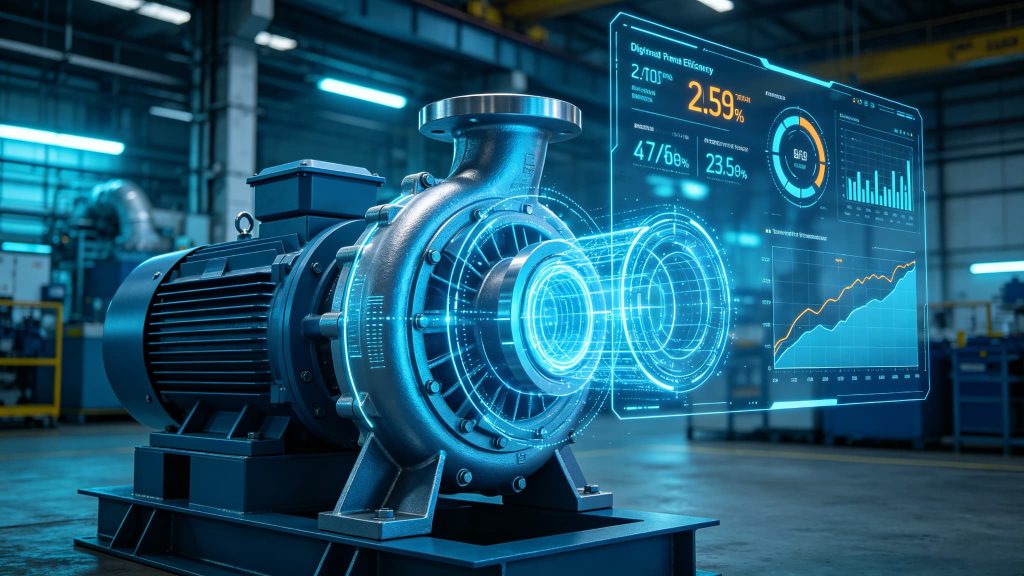
Ultra high energy efficiency, optimised to the utmost
Energy efficiency is no longer a nice-to-have. It is now a core requirement in equipment procurement. And the analysis on this topic comes from detailed industry research, which has uncovered some hard truths that deserve serious attention. To get a clear picture of the real energy efficiency levels in China’s domestic centrifugal pump industry, Sinopec conducted a systematic study and energy efficiency certification process involving 60 to 70 pump manufacturers. The results paint a mixed picture. On the positive side, the industry has made remarkable progress. More than half of the companies have products that meet GB/T 32284 Grade I and II energy efficiency standards for petrochemical pumps. Among those, 40% of the products achieve Grade I efficiency. Leading domestic pump manufacturers have clearly made a qualitative leap in energy efficiency technology.
But when you look at the full range of products across the market, the weaknesses are hard to ignore. During actual procurement and selection, it becomes clear that a large portion of centrifugal pumps on the market struggle to even meet Grade 2 energy efficiency.
Most domestic OH2 centrifugal pumps are built around hydraulic models that were originally introduced from Sulzer technology years ago. As a result, the hydraulic configurations across different manufacturers are broadly similar—and that has created a structural problem. Once a hydraulic model has a built-in upper limit on energy efficiency, even the best manufacturing processes can only go so far. You cannot optimise your way past the original design constraints.
Looking at specific speed data tells us more about the efficiency gaps. Products with a specific speed of 60 or above tend to reach Grade 2 efficiency without much trouble. But pumps in the 40–55 range generally fall short—and this is the mainstream application range for industrial pumps, so the problem is significant. The 20–40 range, where specific speeds are low, struggle to even hit Grade 3. That is a real trouble spot. The research suggests that the 40–55 range should be a key focus for the industry. For the 40–50 sub-range, the basic hydraulic model needs to be optimised to bring performance closer to Grade 2. For products below 40, minor tweaks will not cut it. What is needed is breakthrough innovation.
This gets to the heart of the efficiency challenge. The issue is not that a handful of manufacturers have subpar processes. It is that the industry’s hydraulic models need a complete refresh. Designs that were once considered mature and reliable must all be upgraded to meet the new efficiency standards. The centrifugal pump procurement process is complex, but the overall direction is clear: follow the path of the home appliance industry. Set a minimum entry barrier through mandatory national standards. Use energy efficiency labels to differentiate product performance. And use subsidy policies as positive incentives. The result will be a market that naturally weeds out the inefficient players.
Reduced Construction Time and Upgrades to Standardised Smart Manufacturing
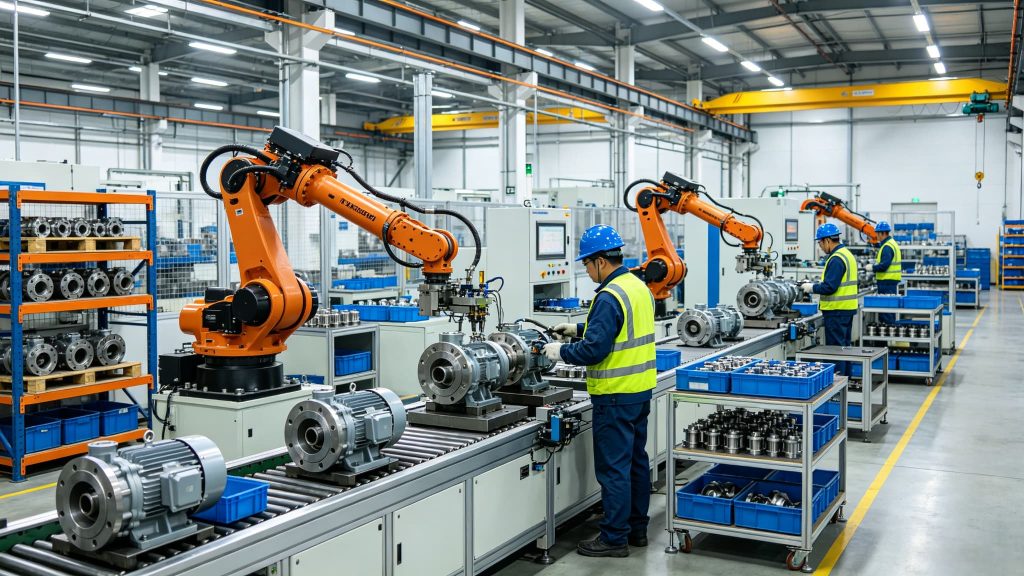
Standardising centrifugal pump base plates can significantly shorten project schedules. Once equipment selection is complete and the pump model is confirmed, a standard base plate can be matched to it. That eliminates the back-and-forth between the design institute’s mechanical and civil engineering teams over design specifications. Civil construction can start earlier. The overall design and construction timeline can be cut by up to three months, which makes a real difference in getting the project online faster.
For base plate standardisation to work, the industry needs a unified plan that all pump manufacturers agree on and follow. API 610 does specify base plate bolt hole dimensions, but the standard is not very universal. When you fit it to different centrifugal pumps, the dimensions are either too large or too small. The new industry standard for base plates improves and optimises the API specification. It unifies base plate dimensions to ensure compatibility with the vast majority of centrifugal pumps on the market.
The biggest barrier to standardisation is not technical. It is reaching a unified consensus across the industry. This base plate specification needs the backing of all pump manufacturers. If each company sticks to its own design philosophy, the standard cannot move forward. Manufacturers have spent decades developing their own base plate designs. Moving to a unified standard means replacing moulds, retooling production lines, and updating drawings. The retrofit costs are significant. Also, the base bolt dimensions in API 610 are not very adaptable and cannot cover all pump types. So the domestic base plate standard did not simply copy overseas specifications. Instead, it was optimised and improved to suit local operating conditions.
Verifying the strength of horizontal centrifugal pump bases has long been a technical challenge. There are no general calculation formulas for flat support structures. You have to rely on finite element analysis. Standardisation can solve this problem. When the standard was developed, base types were categorised, and structural strength and yield conditions were clearly defined. The result is a standard base plate that combines uniform dimensions with reliable load-bearing capacity—enough to meet the petrochemical industry’s strict requirements, where stress levels are two or three times higher than standard. The base carries the full load of the equipment. The deeper value of standardisation is not just about uniform dimensions. It is about making performance predictable. The key characteristics of standardised bases can be predicted, verified, and traced.
It is often said that a manufacturer’s BB2 and BB5 pump capabilities are a direct reflection of its overall strength. The core pumping equipment in ethylene plants is considered the ultimate test of a company’s technical expertise. For traditional ethylene processes, there are now mature solutions for demanding conditions. But new challenges are emerging across various novel processes. The biggest issue is dynamic fluctuation in operating conditions. Take slurry pumps. At start-up, the solids content in the medium is only 5–10%. After a few months of operation, it can spike to 45%. Gas content fluctuations are even more extreme. In some cases, gas content exceeds 15% and can reach as high as 17%. That severely affects pump efficiency and vibration levels. In the past, pump selection was based on a single design condition with a safety margin. That approach works when operating conditions are stable. But it falls apart when conditions fluctuate widely. Equipment now needs to handle a broad range of operating conditions while maintaining both efficiency and stability.
Frequent changes in operating conditions are common in fast-moving new materials processes. The development cycles for new process packages are short, and there is little long-term operating experience to draw on. The parameters specified during the design phase are largely theoretical. In actual production, factors like catalyst activity, feedstock ratios, and operating parameter adjustments can cause the pump’s actual operating conditions to deviate significantly from the design values. That is the fundamental reason why, in many plants, the pumps cannot meet production needs just six months after start-up.
Extreme temperatures add another layer of difficulty. High-temperature molten salt pumps can run at up to 780°C. At that heat, material properties degrade and thermal expansion throws clearances out of spec. Seals and bearings become highly prone to failure. At the same time, temperature control is critical. Heat-sensitive media must be held at a precise, constant temperature, and the equipment itself must withstand thermal cycling. Centrifugal pumps in these applications should not be treated simply as fluid movers. They need to be designed as part of a thermal system.
Liquid hydrogen pumps, on the other hand, face the opposite challenge: ultra-low temperatures. Operating at –253°C or below, metals become brittle, and lubricants and sealing materials fail altogether. As a result, there are very few mature, mass-produced liquid hydrogen transfer pumps available worldwide today.