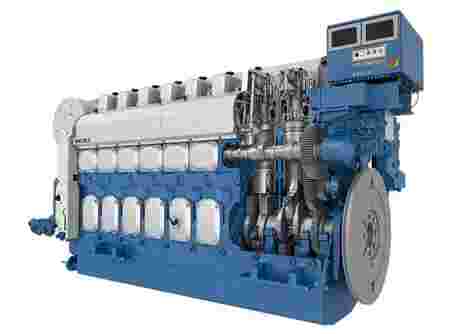
MAN B&W ME vs Wärtsilä RT-flex
[kadence_subtitle]
Key Differences and Pros & Cons of Electronically Controlled ME
As a core component of marine power systems, electronically controlled main engines play a decisive role in the efficiency, emissions, and operational stability of ships. Among the mainstream marine electronically controlled main engines in the global market, MAN B&W ME series and Wärtsilä RT-flex series are widely recognized and adopted by shipowners and shipyards worldwide. For marine equipment practitioners, understanding the key differences, advantages, and disadvantages between these two types of engines is crucial for making scientific selection decisions, optimizing equipment operation, and reducing maintenance costs. This article will conduct a detailed comparison and analysis of the two electronically controlled main engines.
1.Key Differences Between MAN B&W ME and Wärtsilä RT-flex ME
The core differences between MAN B&W ME and Wärtsilä RT-flex electronically controlled main engines lie in their structural design, power supply mode, fuel injection control, and other core links. The following is a detailed comparison from four key dimensions:
1.1 Common Rail System (Core Difference)
High-Pressure Oil Pump:
The common rail system, known as the “heart and brain” of the electronically controlled diesel engine, directly determines the fuel injection efficiency and emission performance of the engine. There is a significant difference in the number and pressure of common rails between the two models:
• MAN B&W ME Model: It is equipped with only single common rail with a pressure of 20 MPa, which is specially used for hydraulic service oil supply. It does not have a dedicated fuel common rail, and the fuel supply is realized through a hydraulically driven high-pressure oil pump.
• Wärtsilä RT-flex Model: It adopts a dual common rail design, which is more complex and precise. One is a hydraulic service oil common rail with a pressure of 20 MPa, and the other is a fuel common rail with a pressure of 100 MPa. The dual common rail design separates the fuel supply and hydraulic control, effectively improving the stability and controllability of fuel injection.
1.2 Prime Power Supply
The prime power supply mode directly affects the starting performance and stable operation of the engine. The two models adopt different power supply schemes according to their own structural characteristics:
• MAN B&W ME Model: It uses a shaft-driven hydraulic pump to supply service oil to the common rail during normal operation. Before the diesel engine starts (when the shaft-driven pump cannot work), an electric hydraulic pump is used to supply service oil, ensuring smooth starting of the engine.
• Wärtsilä RT-flex Model: It adopts a composite cam driven by the crankshaft to drive the plunger pump, which not only maintains the fuel pressure of 100 MPa in the fuel common rail but also drives the lubricating oil pump to maintain the service oil pressure of 20 MPa. This integrated drive mode simplifies the system structure to a certain extent and ensures the synchronization of fuel supply and hydraulic control.
1.3 High-Pressure Oil Pump
The high-pressure oil pump is the core component that provides high-pressure fuel for the engine. The two models differ greatly in the type, drive mode, and functional positioning of the high-pressure oil pump:
• MAN B&W ME Model: It adopts a hydraulically driven high-pressure oil pump, which is equipped with a pressure fluctuation buffer to effectively reduce the pressure fluctuation during oil supply and ensure stable oil pressure. Since it does not have a fuel common rail, the high-pressure oil pump directly supplies fuel to the injector.
• Wärtsilä RT-flex Model: Its high-pressure oil pump is a shaft-driven plunger booster pump, which is driven by a composite camshaft to achieve stable fuel common rail supply. The plunger booster pump has high pressure supply capacity, which can stably maintain the 100 MPa high pressure required by the fuel common rail, laying a foundation for precise fuel injection.
1.4 Fuel Injection Control
Fuel injection control is an important factor affecting engine fuel consumption and emissions. The two models adopt different control modes, resulting in differences in injection flexibility and precision:
• MAN B&W ME Model: The injector adopts a double-needle valve recyclable oil return type, and the injection pressure is not adjustable. The fuel injection adopts analog quantity control, and the fuel injection quantity is controlled by the proportional valve of the Cylinder Control Unit (CCU) of each cylinder, which has stable control performance and is suitable for relatively stable operating conditions.
• Wärtsilä RT-flex Model: The electronic control common rail injection system has strong flexibility, which can easily realize the injection control of 1 to 3 oil nozzles and multiple injection control. The fuel injection quantity is controlled by the energization time of the common rail valve, which can accurately adjust the injection parameters according to different operating conditions, effectively reducing fuel consumption and emissions.
2.Summary and Selection Suggestions
Both MAN B&W ME and Wärtsilä RT-flex electronically controlled main engines are mature and reliable marine power equipment, each with obvious advantages and applicable scenarios. As a professional marine equipment supplier, Superbest Equipment has summarized the following selection suggestions based on years of industry experience:
• If your ship has stable operating conditions, focuses on mechanical efficiency and low cylinder oil consumption, and has a complete hydraulic system maintenance system, the MAN B&W ME electronically controlled main engine is a more suitable choice.
• If your ship has frequent load changes, has high requirements on emission performance and operational flexibility, and can meet the high standards of fuel quality and electronic control system maintenance, the Wärtsilä RT-flex electronically controlled main engine can better meet your needs.
In the context of the continuous upgrading of global marine emission regulations and the increasing demand for energy conservation and environmental protection, the selection of electronically controlled main engines needs to comprehensively consider the actual operating needs of the ship, maintenance capabilities, and long-term operating costs. Superbest Equipment is committed to providing professional marine equipment consultation, supply, and after-sales services, helping shipowners and shipyards select the most suitable equipment and create greater value.
For more details about MAN B&W ME and Wärtsilä RT-flex electronically controlled main engines, please contact us by email.
Advantages and Disadvantages of the Two Electronically Controlled Main Engines
Combined with the structural characteristics and working principles of the two models, their respective advantages and disadvantages are clearly differentiated, which are closely related to the actual operation cost, maintenance difficulty, and application scenarios of the engine.
The specific analysis is as follows:
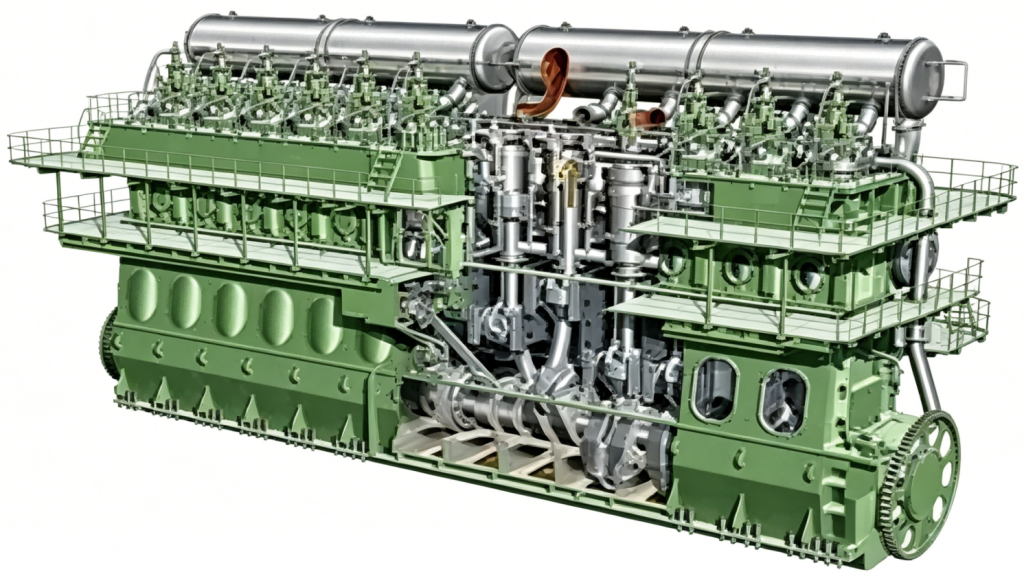
2.1 MAN B&W ME Electronically Controlled Fuel Injection Main Engine
Advantages
• High Mechanical Efficiency: It cancels the traditional cam drive control mechanism, greatly reducing mechanical wear and mechanical loss, and improving the overall mechanical efficiency of the engine.
• Convenient Starting: The dual hydraulic pump supply mode (shaft-driven + electric) ensures that the engine can start smoothly in various environments, with fast starting speed and high reliability.
• Energy Conservation and Emission Reduction: The optimized fuel injection curve reduces the unit power fuel consumption; at the same time, it can effectively inhibit the generation of NOx and particulate matter, meeting the mainstream marine emission standards.
• Low Cylinder Oil Consumption: It adopts an electronic cylinder oil injector, which can accurately control the injection quantity of cylinder oil, reducing cylinder oil consumption and operating costs.
• Comprehensive Real-Time Monitoring: The supporting electronic monitoring system can comprehensively monitor the operating parameters of the engine, timely find potential faults, and improve the safety of equipment operation.
Disadvantages
• Complex Hydraulic System: The hydraulic system of the engine is relatively complex, and its operating status has a significant impact on the normal operation of the main engine. It is necessary to conduct regular maintenance and tracking management on the hydraulic system and lubricating oil quality to avoid faults caused by hydraulic system problems.
2.2 Wärtsilä RT-flex Electronically Controlled Fuel Injection Main Engine
Advantages
• Excellent Emission Performance: It adopts a digital common rail fuel injection system, which can realize smokeless operation, significantly reduce particulate emissions, and better meet the strict marine emission requirements under the background of global carbon neutrality goals.
• Flexible Operation: The variable valve timing technology enables the engine to perform precise adjustment in the load range of 15%-100%, with strong operational flexibility, which is suitable for ships with frequent load changes.
• High Power Density: It has high power output per unit volume, which can save the installation space of the engine and provide more layout space for the ship.
• Low Maintenance Cost: Compared with similar models, the maintenance man-hours are reduced, and the maintenance cycle is longer, which can effectively reduce the maintenance cost and downtime of the equipment.
Disadvantages
• More Potential Fault Points: The structure is relatively complex, involving two common rails and related drive systems. The increase in components leads to more potential fault points, which puts higher requirements on the daily inspection of the equipment.