
Ship Engines
[kadence_subtitle]
In ancient times, the movement of ships was predominantly tethered to human exertion or the whims of natural forces like wind power.At present, one might wonder: do modern vessels still rely solely on such archaic power sources?
1. Energy Conversion
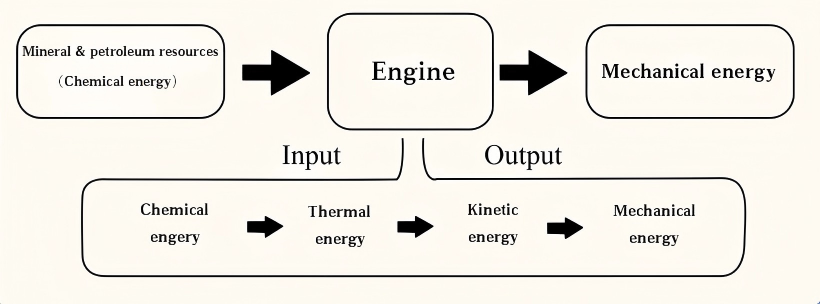
Today, engines stand as the linchpin of a ship’s power generation. Ships driven by engines, known collectively as “powered ships,” owe their locomotion to these remarkable devices. An engine serves as a sophisticated energy transformer, adeptly converting diverse forms of energy into the mechanical force needed to propel a ship through the waves. For instance, mineral and petroleum resources, rich in chemical energy, are harnessed by ship engines. These engines first convert this chemical energy into thermal energy, which is then ingeniously transformed into mechanical energy via processes such as compression and expansion, enabling the ship to navigate the seas.
Energy Conversion Process:
2. Diverse Engine Types
The world of ship engines is a vast and varied one, with several distinct types. Here, we focus on two main engines.
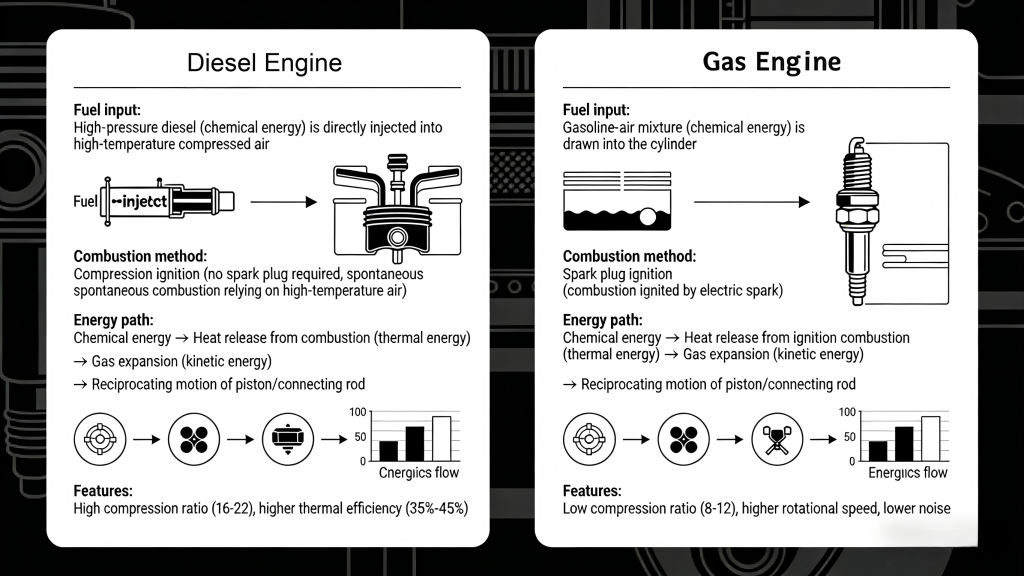
Diesel engines:
Diesel engines operate on the principle of compression – ignition. In a diesel engine, air is drawn into the combustion chamber and highly compressed. As the air is compressed, its temperature rises significantly. Then, diesel fuel is injected into the hot, compressed air. The high temperature causes the fuel to ignite spontaneously, without the need for a spark plug as in gasoline engines. The combustion of the fuel creates a high – pressure force that pushes the piston downwards. This piston movement is converted into rotational motion by the crankshaft, which is ultimately connected to the ship’s propeller, propelling the vessel forward.
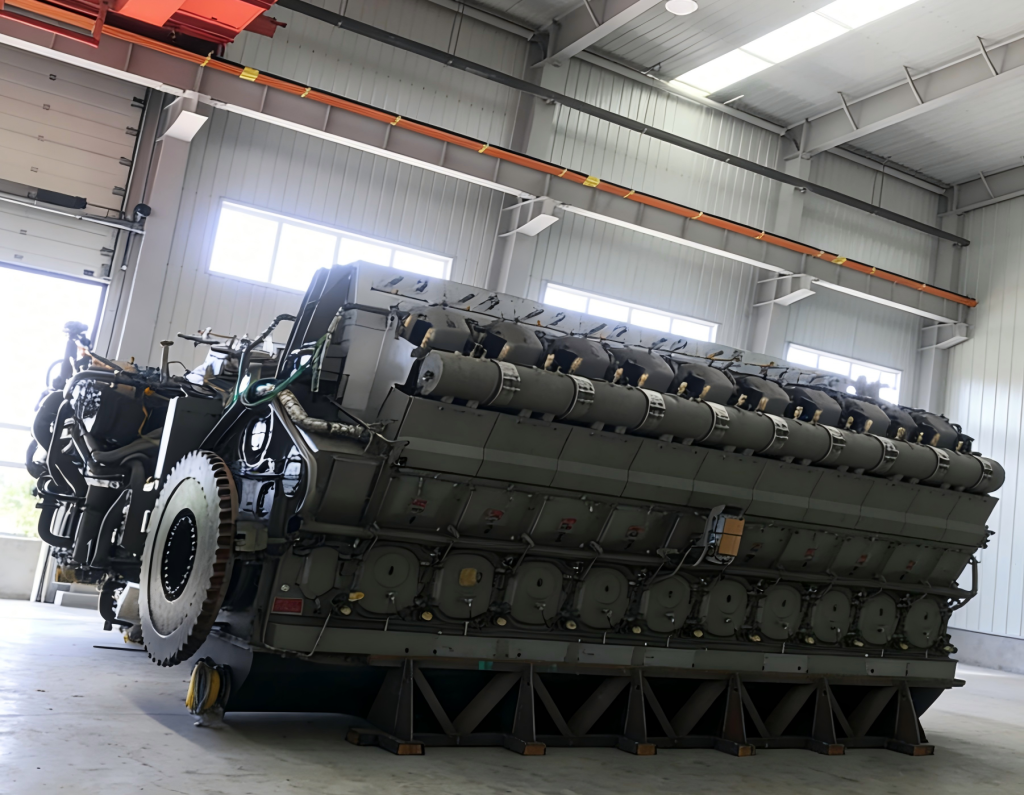
Gas Engine:
Gas engines used in ships typically run on natural gas or other gaseous fuels. These engines work on a spark – ignition principle similar to gasoline engines, but are optimized for gaseous fuels. First, a mixture of air and gas fuel is drawn into the combustion chamber. This mixture is then compressed. A spark plug ignites the compressed air – fuel mixture, causing combustion. The force generated by the combustion pushes the piston, which in turn rotates the crankshaft, providing the power to drive the ship.
3. Summary
Engines are the very heart of a ship, providing an unwavering source of power. Given the diverse range of ship sizes and purposes, the choice of engine is crucial. Our company, a leading pure – play foreign – trade enterprise, specializes in a comprehensive portfolio of products including generator sets, engines and their spare parts, turbochargers and their associated components, impellers, and pumps. These products find extensive applications not only in the maritime sector but also in power plants, whether they are bio – fuel, biogas, or natural – gas – powered. When you choose our products, you’re not just investing in components; you’re investing in the future of efficient and reliable power generation and marine propulsion. Let us be your partner in driving progress across the seas and in the energy landscape.